
In-House Production : How Furniture Quality Control Shapes Every Step of the Manufacturing Process
Introduction
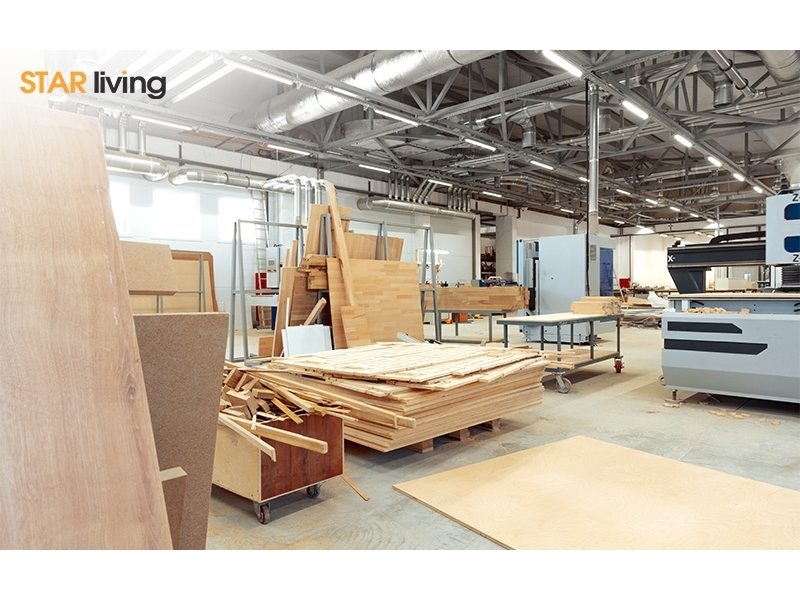
In a market where trends come and go, lasting value matters. Consumers now demand furniture that combines design, durability, and everyday function. Behind every well-crafted chair, table, or living room furniture in Singapore lies a meticulous process of quality control, which starts long before the first screw is turned. From sourcing raw materials to assembly and final inspection, each stage of production can make or break the integrity of the final product.
At Star Living, in-house furniture production and trusted partnerships in China provide a distinct advantage: complete oversight from start to finish. By integrating furniture quality control into the manufacturing process, we ensure that every piece of furniture meets the high standards expected by customers nowadays.
In this article, we take a closer look at how furniture quality control is built into the process and why it matters.
Key Takeaways:
- How Does Material Selection Impact Furniture Quality?
Furniture quality control begins with choosing and testing raw materials for durability, safety, and environmental compliance. High-quality inputs set the foundation for long-lasting furniture.
- Why Is Design Validation Critical Before Production?
Early design reviews and stress testing ensure that furniture can withstand everyday use. This step in furniture quality control prevents functional flaws and supports long-term performance.
- What Happens During Factory-Level Quality Checks?
From precise cutting to finishing, each stage of production is closely monitored. Furniture quality control helps maintain accuracy, eliminate defects, and maintain consistency across every batch.
- Why Is the Final Inspection So Important?
Before shipping, each piece goes through a thorough check to confirm measurements, functionality, and packaging. This final layer of furniture quality control reduces returns and maximises customer satisfaction.
- How Is Furniture Quality Maintained After Production?
Ongoing furniture quality control—through customer feedback, traceability systems, and compliance with global standards—allows brands like Star Living to continuously improve and uphold trust.
Laying the Foundation of Quality
What Is Furniture Quality Control?
Furniture quality control lays the foundation for a reliable manufacturing process. It encompasses a series of inspections, tests, and standardised checks designed to ensure that every piece produced meets strict criteria. The process starts long before the final product takes shape. It begins with the careful selection and inspection of raw materials to confirm that they meet benchmarks for strength, safety, and aesthetic consistency. Any subpar material is flagged early to avoid compromising the final product.
As production progresses, quality checks are embedded at each critical stage: from precision cutting and component fitting to joint reinforcement and surface finishing. These checkpoints help detect potential issues, like misalignments, uneven coatings, or structural weaknesses, before they escalate into costly problems.

During the final assembly, a thorough evaluation ensures that all components fit perfectly, finishes are uniform, and functional features operate smoothly. The goal is not only to maintain structural integrity but also to deliver a flawless end product that meets or exceeds customer expectations. By prioritising furniture quality control at every step, manufacturers can reduce defects, minimise returns, and build lasting trust with their customers.
What You Should Know About Furniture Quality Standards
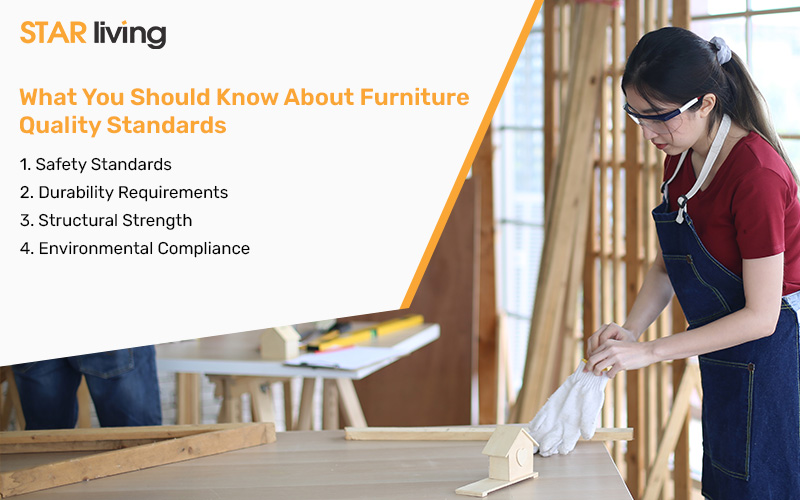
Furniture quality standards act as essential benchmarks that define how furniture should be designed, constructed, and evaluated. They help manufacturers maintain consistent quality, prioritise user safety, and deliver products that align with consumer expectations. At the same time, these standards guarantee compliance with industry regulations and environmental guidelines.
Key areas covered include:
1. Safety Standards
Safety is a top priority in the furniture manufacturing process. Products must be stable, free from sharp edges, and securely constructed to prevent tipping, breakage, or injury during use. Each item must meet specific stability and impact resistance criteria for usage safety.
2. Durability Requirements
High-quality furniture must withstand the test of time. Furniture durability standards assess how well materials resist wear, scratches, impact, and general ageing. These tests simulate years of use to verify that a piece won’t easily degrade, sag, or lose function over time.
3. Structural Strength
Furniture must hold up under pressure. Quality standards include load-bearing tests that assess a product’s ability to support weight without warping or collapsing. Joint integrity is also evaluated to keep components securely connected throughout the product’s lifespan.
4. Environmental Compliance
Modern consumers care about what goes into their furniture. Environmental standards, such as those set by the California Air Resources Board (CARB), help reduce indoor air pollution by limiting formaldehyde emissions. Materials like CARB P2-certified wood ensure that products are both safe and environmentally responsible.

Manufacturers who consistently meet these furniture quality control standards not only minimise product defects but also build consumer trust. It signals that they are committed to delivering safe, durable, and ethically produced furniture that stands up to real-world use.
How Does Material Selection Contribute to Furniture Quality Control?
The foundation of durable, high-performing furniture lies in the quality of the materials used. From structural components to surface finishes, every material choice influences how a piece will look, feel, and hold up over time.
At Star Living, material selection is far from a passive process. With the support of trusted manufacturing partners in China, our development team takes an active role in inspecting and approving all incoming materials. This ensures that only those meeting the highest standards for consistency, strength, and sustainability move forward into production.
Before a single piece is assembled, materials are subjected to a series of strict quality checks:
1. Moisture Content Analysis
Especially critical for wood, this test prevents future warping, swelling, or cracking due to environmental changes.
2. Structural Integrity Testing
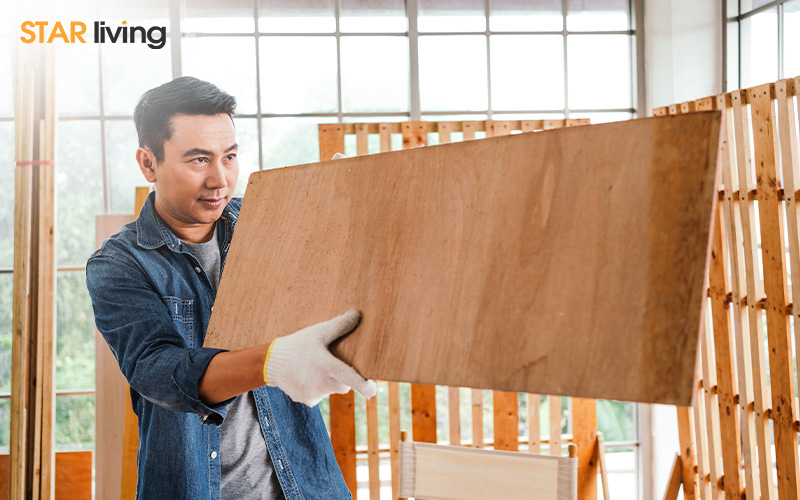
Metals and engineered boards are examined to confirm they can withstand the stresses of everyday use without bending, breaking, or deteriorating.
3. Certification Compliance
Materials are screened for safety and environmental standards, such as CARB P2 certification. It limits formaldehyde emissions and improves indoor air quality.
By identifying and addressing potential issues early, this rigorous material vetting process helps eliminate defects before they happen. This helps ensure that every piece of our designer furniture in Singapore delivers lasting quality, durability, and peace of mind to our customers.
How to Ensure Reliable Design Validation
Upon the completion of furniture material selection and factory inspection, the next important step in the production process is furniture design validation. Even the best materials can underperform if the design lacks structural soundness or functional practicality. At Star Living, we conduct the validation long before product launches so that everything is in place.
1. Quality-First Design Reviews
Every new design undergoes a thorough review with quality and performance in mind. The development team examines whether the proposed structure can support weight, maintain balance, and deliver lasting comfort. From ergonomic considerations to joinery angles, each detail is assessed to uphold the furniture’s aesthetics and functionality in everyday settings.
2. Prototyping and Stress Testing
Once a design passes the review stage, prototypes are constructed for hands-on evaluation. These early models are subjected to rigorous stress testing that simulates years of regular use. The furniture quality control team focuses on key performance areas:
- Load-Bearing Capacity
Ensuring the piece can safely support weight without bending or collapsing.
- Joint Strength
Verifying that connections between components withstand repeated stress.
- Stability Under Stress
Testing the product’s ability to stay level and balanced during movement or shifting loads.
Based on these findings, the design may be refined or reinforced to align with Star Living’s internal durability benchmarks. This careful process confirms that only well-validated, high-performing pieces move forward into full-scale production. The goal is to uphold our commitment to furniture quality control.
Factory Production and Final Inspection: Where Quality Takes Shape
The final stretch of the furniture manufacturing journey is where design and planning become tangible products. At Star Living, this crucial phase takes place primarily in its own China-based production facility, supported by a carefully curated network of partner factories. This in-house manufacturing approach allows for meticulous oversight at every stage, ensuring that timelines are met without compromising quality.
Through close coordination between design, engineering, and production teams, we guarantee that every finished product meets its exacting standards for precision, durability, and visual appeal.
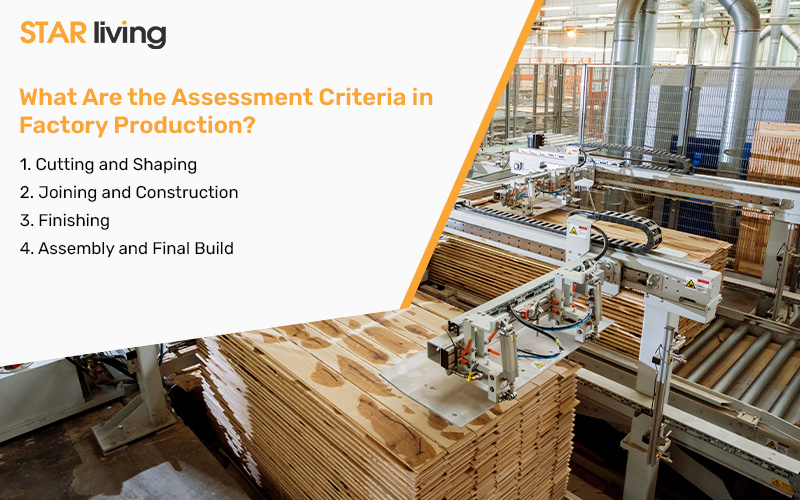
What Are the Assessment Criteria in Factory Production?
To maintain product excellence, Star Living integrates strict furniture quality control checkpoints across each stage of factory production:
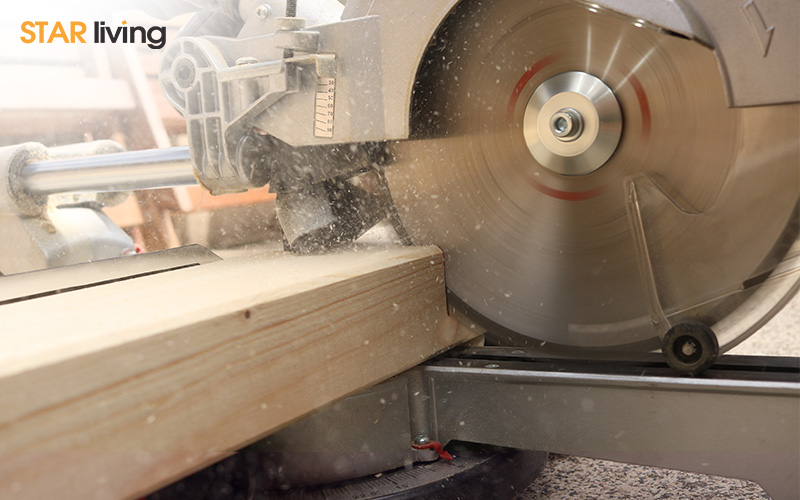
1. Cutting and Shaping
Once raw materials are approved, they move into the cutting phase. Each piece is measured and shaped with exacting precision to match design specifications. Furniture quality control teams inspect for dimensional accuracy to prevent issues such as misaligned joints or gaps in assembly.
2. Joining and Construction
Structural integrity is established during the joining stage. Whether using traditional woodworking joints, industrial adhesives, or mechanical fasteners, all components must align perfectly and form strong, secure connections. Quality inspectors closely evaluate each joint for tightness, proper bonding, and consistent construction techniques, laying the groundwork for long-term durability.
3. Finishing
At Star Living, finishing is treated as both an art and a science. It enhances the furniture’s look while shielding it from daily wear. Each surface is expertly sanded before finishing touches are applied, with furniture quality control teams checking for:
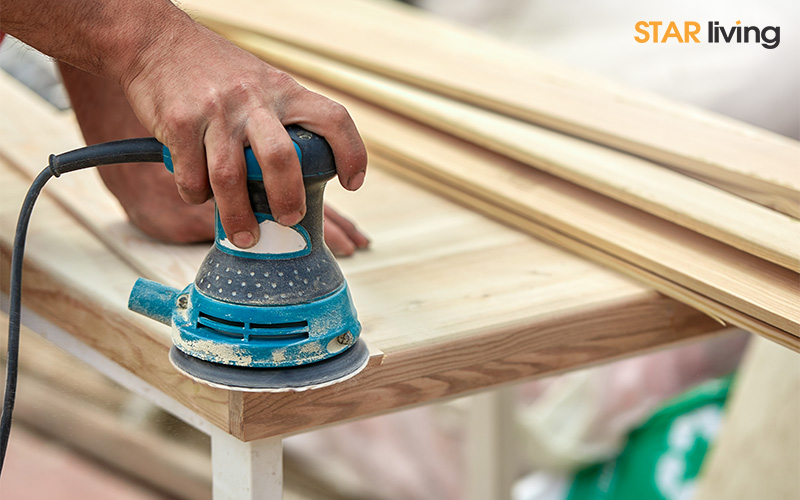
- Uniform surface smoothness with no blemishes or rough patches.
- Even, streak-free application of finishes.
- Colour consistency across multiple units or batches.
4. Assembly and Final Build
In the final stage, all components are assembled into a fully functional piece. This includes the installation of hardware such as hinges, drawer slides, and locking mechanisms. A comprehensive inspection follows, focusing on:
- Safety and Stability
Ensures the item stands level and is structurally sound.
- Functionality
Verifies that drawers open smoothly, doors close properly, and moving parts operate without resistance.
- Visual Inspection
Confirms that all visible elements meet design and finishing standards.
This last layer of furniture quality control is what allows us to confidently deliver pieces that not only look refined but also perform reliably.
Why Does the Final Check Matter?
Despite rigorous checks throughout production, the final inspection is necessary in quality assurance. For customers shopping for sofas, room pieces, and other living room furniture in Singapore, this final step ensures they receive products that are true to their intended design and free from flaws. The key is to provide one last safeguard before reaching the customer.
Before packing and shipping, the furniture quality control team examines:
- Product measurements and dimensions to confirm they align with design specifications.
- Surface imperfections such as scratches, dents, or inconsistent finishing.
- Packaging accuracy, including labels, documentation, and protective materials.
Protective packaging is part of the furniture quality control process itself. When done right, it safeguards each item during transit, ultimately enhancing customers’ unboxing experience.
What Does Post-Production Quality Monitoring Cover?
Star Living’s commitment to quality doesn’t end when a product leaves the factory. Ongoing monitoring after production plays a part in maintaining high standards and continuously improving the customer experience.
1. Customer Feedback Loop
Customer reviews and after-sales reports are regularly collected and analysed to identify recurring issues or areas for improvement. This feedback loop helps the development team refine existing designs, address functional gaps, and enhance future product iterations.

2. Batch Traceability and Adjustment
Star Living can trace any quality concern back to its source—whether it’s a specific material batch, supplier, or production line. This traceability enables swift corrective action, minimising disruption and preventing widespread quality issues.
3. Certification and Compliance
To uphold consumer trust and meet global requirements, Star Living keeps all factory operations compliant with international safety and environmental standards. This includes adherence to ISO protocols and emissions certifications, such as E1 and CARB P2, reinforcing the brand’s dedication to responsible manufacturing.
Frequently Asked Questions
1. How does Star Living maintain consistent furniture quality?
Supported by its reliable manufacturing partners in China, Star Living’s development team monitors every step of the production process—from material selection, design testing, assembly, and finishing to packaging.
2. Are Star Living’s products compliant with environmental safety standards?
Yes. All materials used go through rigorous testing and comply with environmental and health safety standards such as E1 and CARB P2. This certifies that the products are suitable for indoor environments and meet low-emission standards.
3. How are Star Living products tested for durability?
Each product undergoes a series of quality and stress tests, from load-bearing trials to wear-resistance and stability checks, to ensure it meets performance expectations for everyday use.
Conclusion
At Star Living, we understand that true comfort and beauty come from the details. This explains why we embed quality into every stage of furniture design and production. By managing most of our production in-house, we maintain tighter control over quality, offer better value, and long-term satisfaction for every customer.
As a trusted name in online furniture in Singapore. Star Living is here to help you create living spaces that reflect your style and stand the test of time. Since 1981, we’ve been proudly serving homeowners as an integrated designer, retailer, manufacturer, and exporter of household furniture and accessories.
Furnishing a new home or upgrading your space? Our online furniture shop in Singapore offers a curated range of thoughtfully designed, high-quality pieces.
Contact us and explore our collections today.